
Is your B2B SaaS sales team struggling? Value selling may be the solution. We explain what value selling is, how to do it right, and how not to do it.
Implementing value selling across an entire team isn’t easy, which is why we created the Cuvama Value Selling Framework.
3 tips for getting your whole sales team to perform good discovery consistently and at scale. We argue why performing good discovery is critical and provide practical tactics to transform to a selling value outcomes business, not products.

3 + 6 tips to maximise your salesreps efficiency selling the business value of your solution, rather than its features and functions. Includes Value Selling Do’s and Don’ts!

We argue the comm challenges that prevent value selling in the solution and proposal phase and provide 3 ready-to-implement tips to continue selling and delivering value at this stage of the sales process.

Discover 4 strategies for selling outcomes and learn how you can build them into your company’s processes to ignite your B2B SaaS growth: engage and sell on outcomes to help your customer buy, give you sales predictability and power your customers’ success.
In this post we share the Cuvama approach to solving the adoption problem. Across the B2B SaaS world, businesses, customers and CS teams in particular are tearing their hair out in order to drive ‘good adoption’ for the end-users. Why are 80% of sellers not adopting value selling? How can businesses better define and track good adoption?
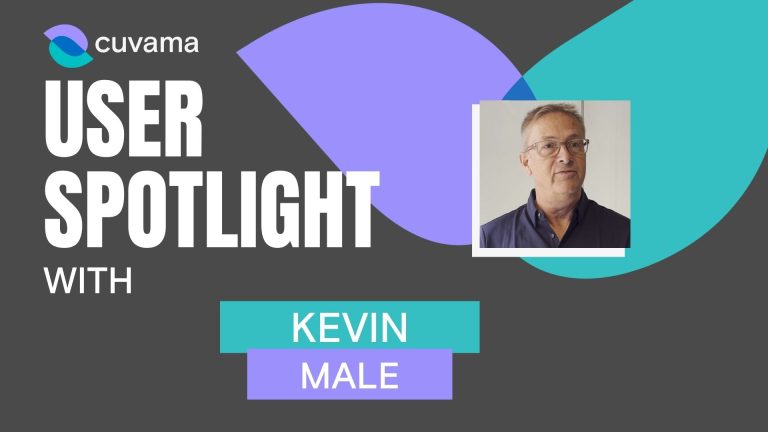
In this interview, Kevin Male, Director of Commercial Strategy and Value Engineering at Zellis, shares his journey of introducing and scaling value selling across the organization.
Of all the go-to-market investments a B2B SaaS business can make, there are few that will deliver the business impact of increasing a sales team's adoption of Value Selling. Read our latest research and guide on why adoption is so important and how to scale Value Selling across your sales team.
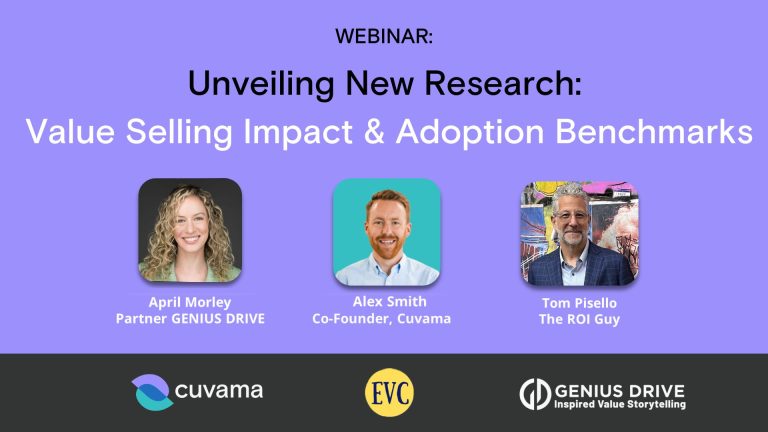
In this webinar with Genius Drive we reveal our latest research into the adoption and impact of value selling. Over 100 B2B SaaS companies participated in our study, allowing us to produce the first ever value selling benchmarks.

Challenger reps are the top performers in B2B sales teams by a significant margin. But building a team of Challengers is easier said than done. Learn how to nail and scale the Challenger Sale across your team with Cuvama.
Discover how Cuvama’s Discovery and Business Case tools bring Gartner’s vision for product embedded value engineering to life for B2B SaaS and AI vendors.

Announcing the industry's first ever research report into the adoption and impact of value selling. Cuvama, Genius Drive and the Enterprise Value Collective partnered to survey over 100 B2B SaaS companies to create Value Selling's first benchmarks.

You don't want to miss this eye opening discussion about the future of Value in SaaS. Tom Pisello (Founder of Aliean, ex-Chief Evangelist at Mediafly & now founder of Genius Drive) shares what he's seeing in the market and his thoughts on what comes next.

In my previous life as a value seller, there were 2 core beliefs I liked to share around what constituted an effective business case or investment thesis: first that it was less, if at all, about the numbers...

Learn why embedding a customer success outcomes-based culture throughout your organisation will increase customer satisfaction and accelerate growth. The article also explores how to start the journey.

We explain why discovery is so important in all B2B subscription sales processes and how to do it right. We explain in detail the 7 levels of discovery skills discussed by Alex Smith and Peter Cohan in a recent webinar.

Watch this webinar to learn where you and your team are on the 7 levels of discovery and how you can level-up the 80% with skills and support from technology platforms like Cuvama.
Watch this on-demand webinar to learn where you and your team are on the 7 levels of discovery and how you can level-up the 80% with skills and support from technology platforms like Cuvama.

Almost every company I’ve worked at has struggled to replicate the capabilities of its rockstar sellers across the whole team. How can we take the attributes of consistent over performers and implant those skills and behaviors in the rest of the team?
In this webinar with Genius Drive we reveal our latest research into the adoption and impact of value selling. Over 100 B2B SaaS companies participated in our study, allowing us to produce the first ever value selling benchmarks.

Our Delivery and Customer Success Lead Saagar makes sure that our customers get up and running with Cuvama in quick time and successfully sell and deliver on value.
Watch this webinar to learn where you and your team are on the 7 levels of discovery and how you can level-up the 80% with skills and support from technology platforms like Cuvama.